Where do you manage the top horizontal menu?
- To manage your menu, go to Settings > Menus in your manager.
- To manage your horizontal menu, click the edit button on the horizontal menu. A pop-up window opens.
On this page, you can edit:
- the top horizontal menu
- the vertical menus (we recommend reading the tutorial: manage your vertical menus)
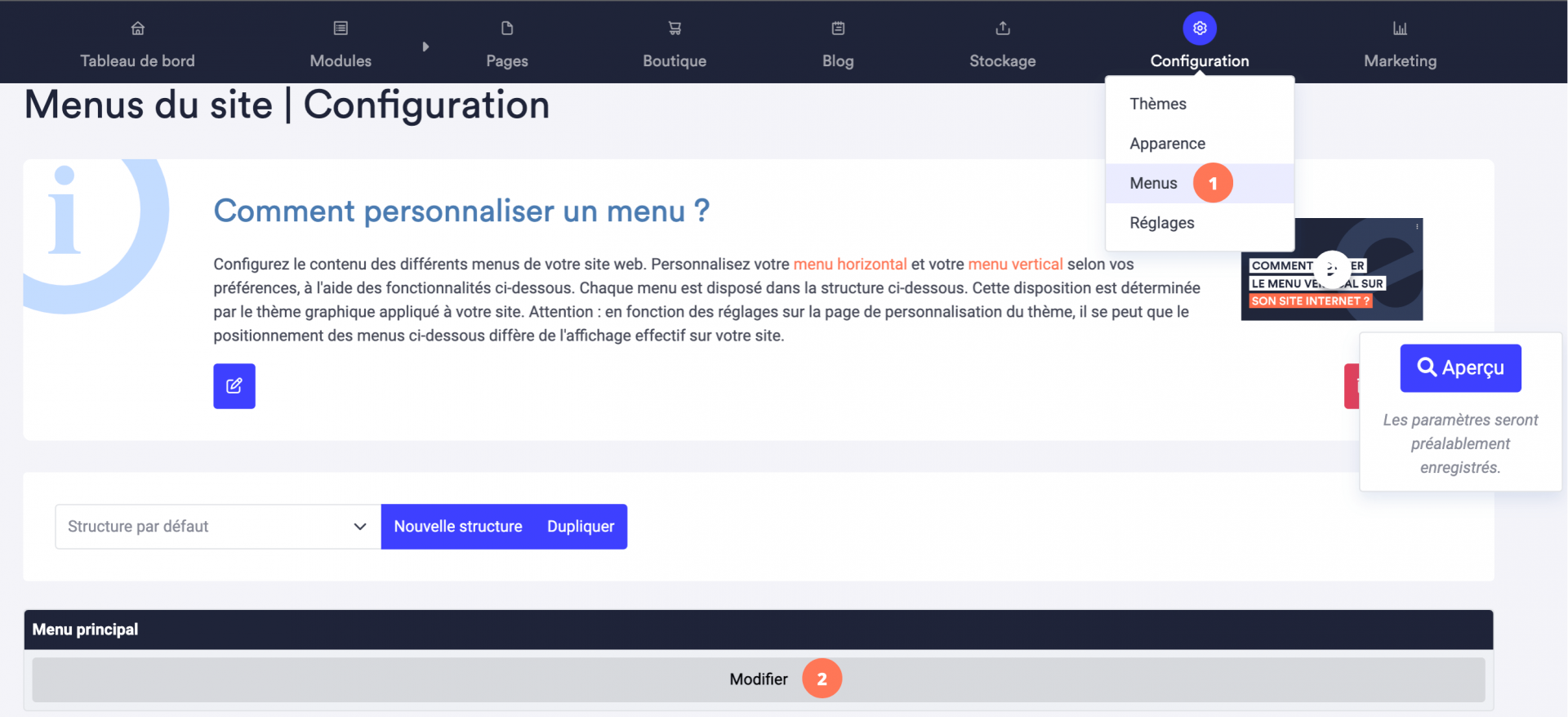
The menu management pop-up
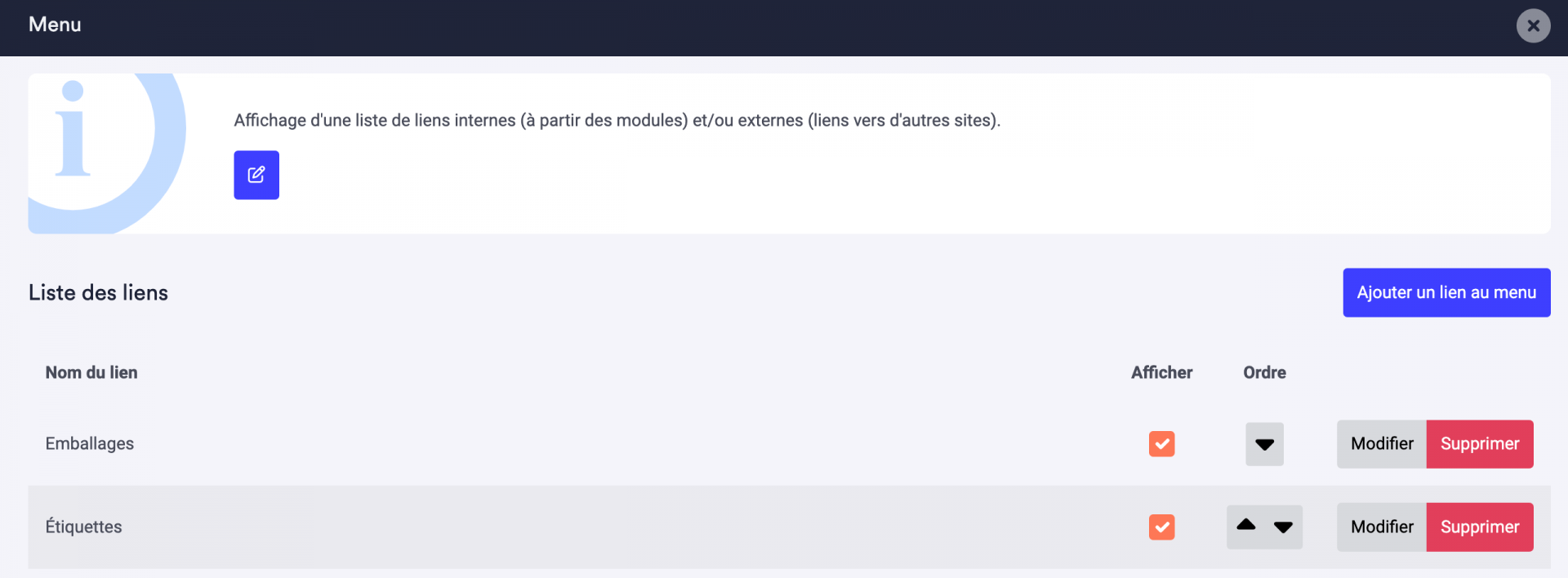
This window (called a pop-up) lets you fully manage the content of your horizontal menu.
On the left you can read the titles of the links in your menu. Opposite them are the arrows that let you change the order of the links very simply:
- click the down arrow to move a link down in the menu
- click the up arrow to move a link up.
You can edit and delete a link. If you delete a link, you will be asked to confirm for safety.
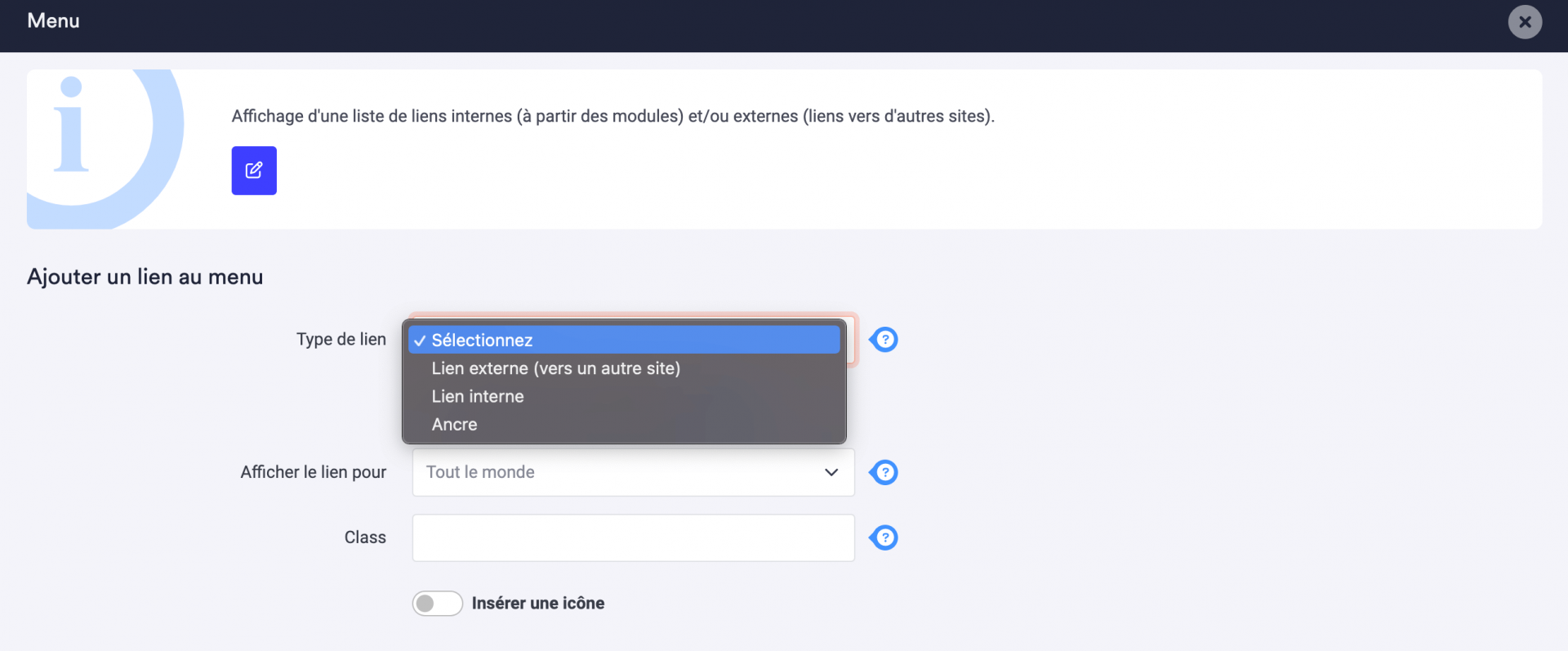
Add a link to the menu
Click New link. You have three options:
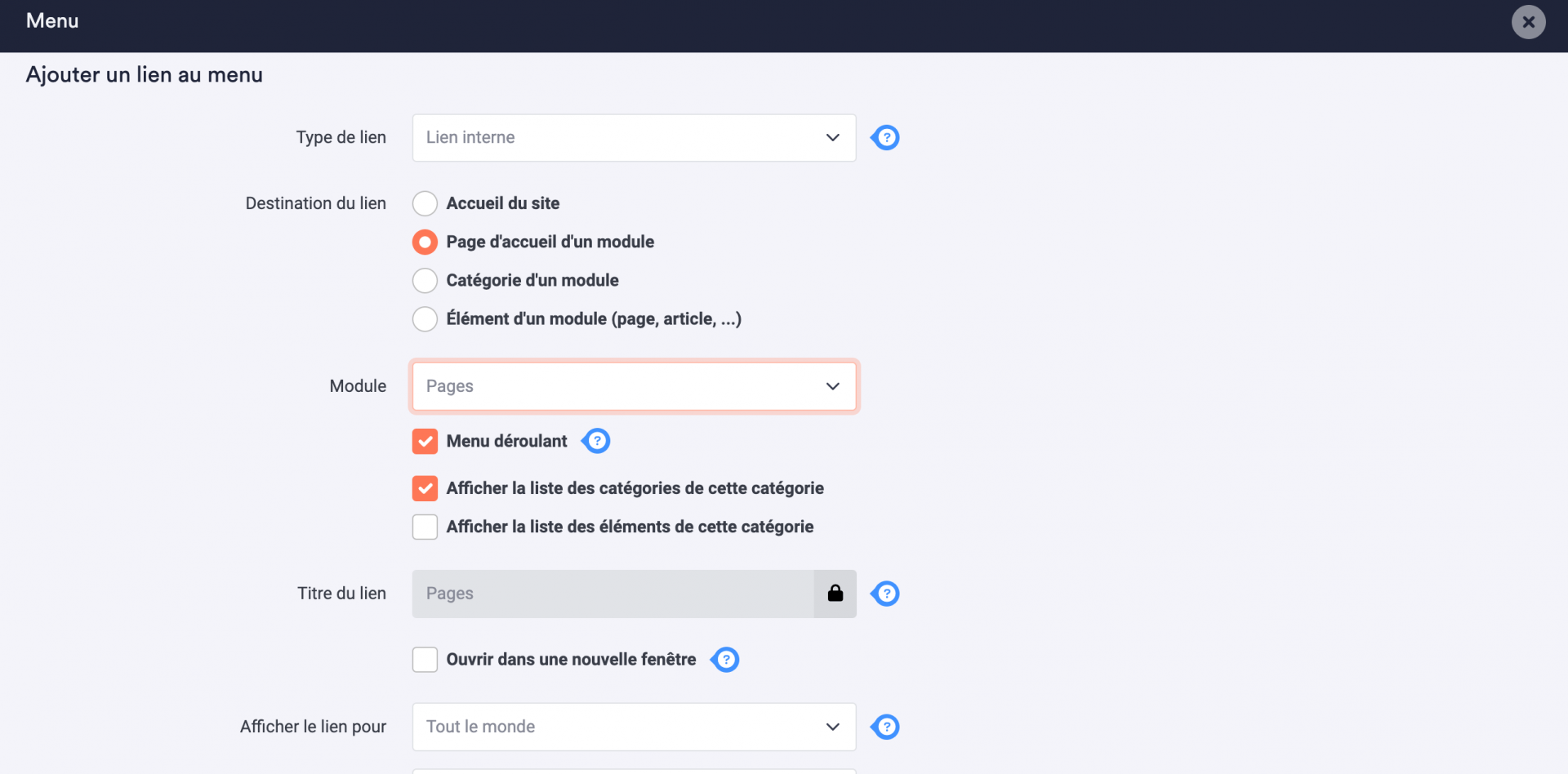
- Add an internal link: this lets you create a link in your horizontal menu to a page of your website. This is the option we will detail in the next section. To make an internal link, the content must already exist in your manager.
- Add an external link: this option lets you create a link to another website (for example, a partner's site). You simply enter the URL (the address of the site or page, for example http://www.sitename.com) and the word that will be used for the link.
- Add an anchor: this option lets you add a link to a part of the page. Learn how to place an anchor in a page.
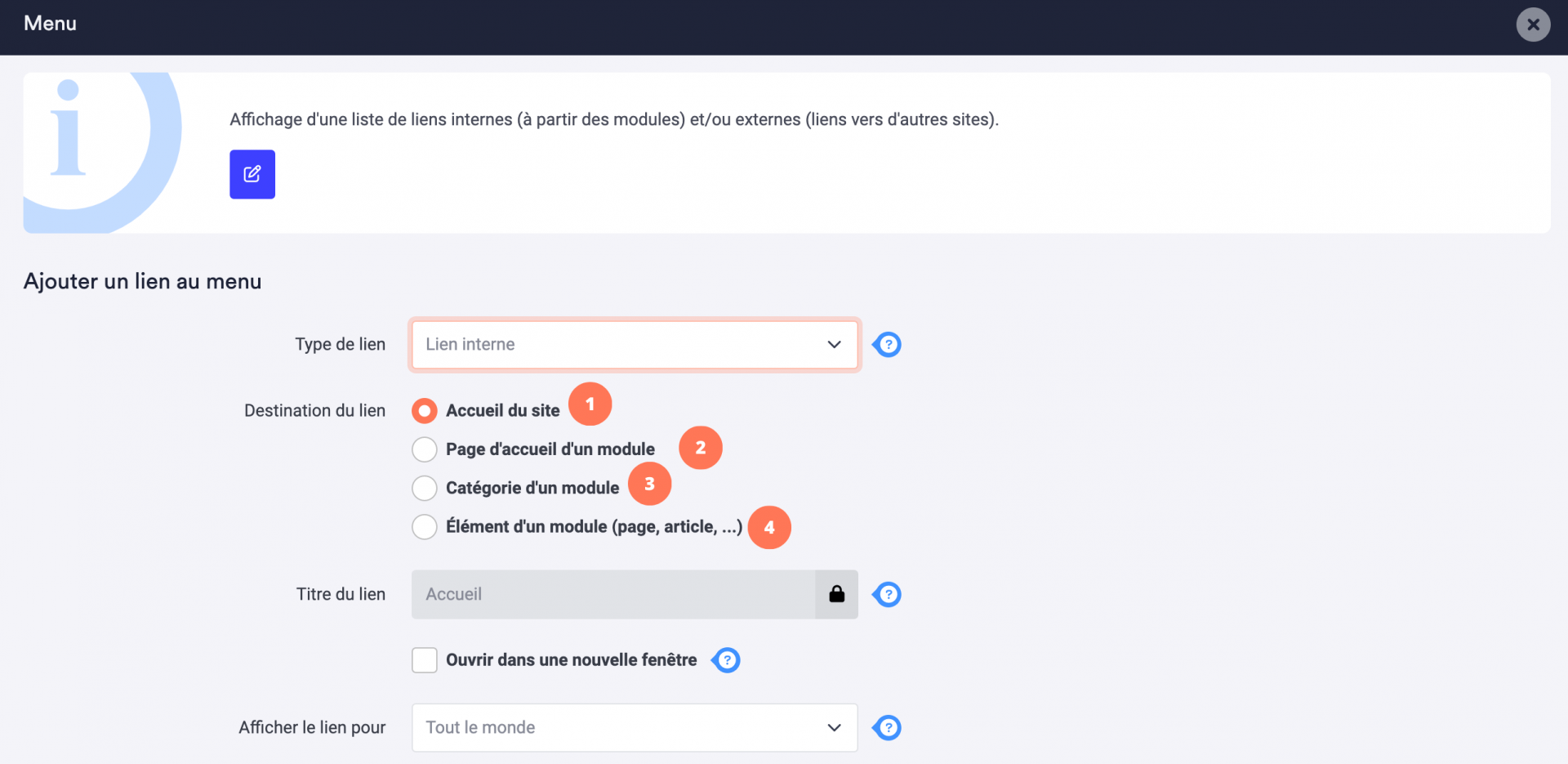
Add an internal link to the menu
Making an internal link means adding a link to an existing page of your website. You can make an internal link to:
The site homepage (1): this link is very often already there by default.
The homepage of an add-on (2): this lets you very simply create a link to the homepage of an add-on you have previously enabled, for example a link to your blog, forum or photo album.
A category of an add-on (3): this choice goes into more detail and lets you link directly to a category.
For example, if your website is about wine, you can link directly to the "White wine" category you have created, then add another link to "Red wine", and so on. These are "pages" categories, but also categories of other add-ons such as the blog. You could, for instance, link to a blog category called "Wine news".
Be careful: you must first create your categories in each of your add-ons, then create the links.
An item of an add-on (4): this option lets you link directly to an item (a page, for example).
So, with the same example, you could link to a page dedicated to Bordeaux wine that belongs to the "Red wine" category. You could also link to a specific blog post. This works for all the items of all the add-ons (for example, to link to a particular contact form or a quote request).
Create a drop-down menu
You can create a drop-down menu in your top horizontal menu. When a visitor hovers over the title in the menu, you could for example show:
- the list of categories and subcategories of an add-on (for example: Pages > My wines > White wines / Red wines)
- the list of categories and items stored in a category (for example: My wines > Red wines > Alsace / Bordeaux)
To find out more, we invite you to read the tutorial: create a drop-down menu
Practical case: link to an add-on category
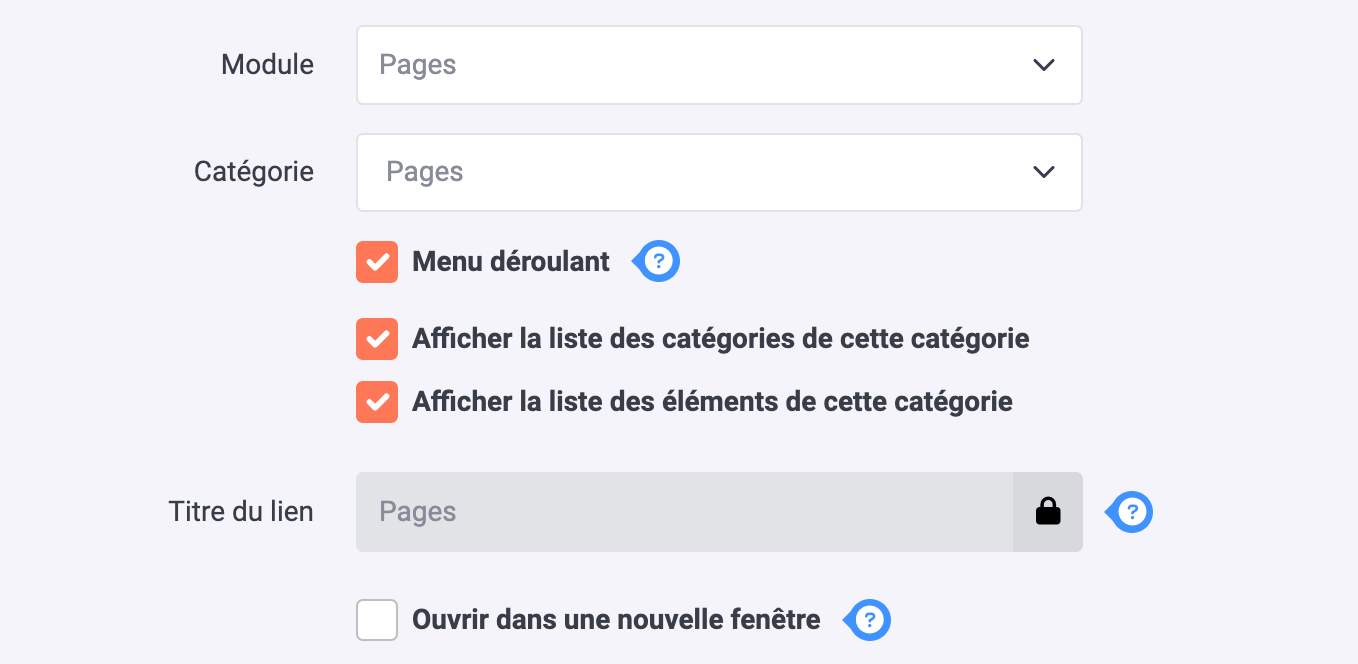
To conclude this tutorial, here is a practical exercise. We will add (as in the example above) a link to a page category named "Previews".
To do this, choose add an internal link, then select Category of an add-on.
Next, choose the add-on in question ("Previews" being a page category, select the Pages add-on). Finally, select the page category.
You can change the title of the link displayed in your menu by clicking the padlock to unlock the text field (which shows the title of your category by default).
Remember to save to close the pop-ups, then save at the very bottom of the page to confirm in Settings > Menus.
Conclusion
When you create content or enable add-ons, we offer to add these links to your menus automatically and very simply. But you can also go much further by creating menu templates (to have different menus on the pages of your website) or by editing your horizontal menu in HTML.